
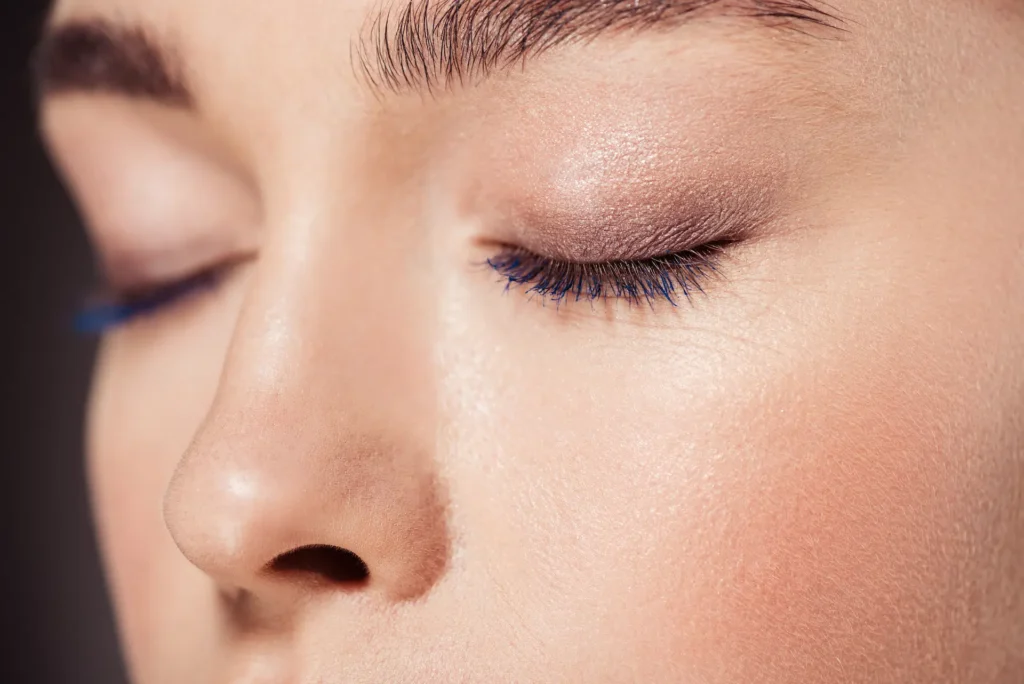
The feeling when after a Upper eyelid lift where the swelling doesn't go away, For those affected, this is often an enormous physical and psychological burden. The desire for a fresh, alert look – the main motivation for the procedure – is reversed. Instead of renewed freshness, disappointment prevails over a "doughy," unnatural swelling that continues to make the eyes look tired or even "ill." This persistent swelling is often a sign of lymphatic congestion (lymphedema).
At Dr. Gueven's practice in Munich, we address this issue with deep understanding and specialized expertise. Dr. Gueven, a leading specialist in aesthetic facial surgery with experience in over 3,000 procedures, specializes in complex corrective surgeries. His international training, acquired from leading figures in Hollywood, has not only taught him the most modern techniques but also instilled in him a keen sense of natural aesthetics. His goal is to address the root causes of the problem.„Upper eyelid lift: swelling doesn't go away“to analyze and give you back a harmonious, authentic result.”.
What is this? If swelling doesn't go away after an upper eyelid lift.
It is crucial to distinguish between normal postoperative swelling and true lymphedema.
- Normal swelling: It is most pronounced in the first 3-5 days after surgery, often accompanied by bruising. It responds well to cooling and is mostly gone after 10-14 days.
- Lymphatic congestion (persistent swelling): If the Upper eyelid lift, swelling doesn't go away, If the swelling persists even after 3-4 weeks and feels "doughy," "watery," or "pudding-like," it is referred to as postoperative lymphedema. The tissue fluid (lymph) can no longer drain properly. This swelling is often worst in the morning and responds poorly to cooling.
The most common cause: Why the swelling doesn't go away after upper eyelid surgery
The development of lymphedema is multifactorial. While individual predisposition plays a role, the surgical technique and, above all, the indication for surgery are the decisive factors in determining the course of the disease. Upper eyelid lift, swelling doesn't go away.
- Incorrect indication (The main problem):
This is the most common reason for an unsatisfactory result. In many patients, the problem is not (only) the skin on the upper eyelid, but a drooping eyebrow (brow ptosis). If, mistakenly, only an upper eyelid lift is performed, the (already too low) eyebrow is pulled even further downwards by the skin removal. This creates unnatural tension, compresses the tissue, and can block the delicate lymphatic drainage pathways in the upper eyelid. The result: The swelling from the upper eyelid lift does not subside, and the eyes appear "slumped" or "angry.".
- Ignored Malar Bags (Festoons):
Often, malar bags (swelling on the cheekbone) are already present before surgery, indicating a lymphatic drainage disorder in the midface. An isolated upper eyelid lift can significantly worsen this problem due to the altered traction direction and the severing of further lymphatic vessels.
- Traumatic surgical technique:
A rough or imprecise approach during surgery can unnecessarily damage the delicate tissue and lymphatic vessels, making regeneration more difficult.
Dr. Gueven's philosophy: How to avoid the risk of permanent swelling from the outset.
The best treatment for the problem „Upper eyelid lift: swelling doesn't go away“Its prevention is key. Dr. Gueven’s philosophy and internationally learned techniques are designed to minimize this risk.
- Holistic analysis (facial balancing): Dr. Gueven analyzes not only the eyelid, but the entire upper face as an aesthetic unit. He can identify when the cause is a drooping eyebrow. In his consultations, for which he takes "a great deal of time," he honestly informs patients that a simple eyelid lift will not achieve the desired result.
- The correct technique (AURELIA® Lift): Instead of simply removing skin, the solution is often a "complex upper eyelid lift" (patient quote). Dr. Gueven combines the eyelid lift with an endoscopic temple or brow lift (AURELIA® Lift). This "keyhole procedure" lifts the brow, relieves pressure on the upper eyelid, and restores natural drainage pathways instead of blocking them.
- Microsurgical precision: With experience from over 3,000 procedures, Dr. Gueven operates with extreme tissue-sparing precision. He uses microsurgical instruments to precisely separate the delicate anatomical layers, minimizing trauma to the lymphatic vessels.
What to do if the swelling doesn't go away after an upper eyelid lift? (Correction options)
If you are suffering from persistent swelling after surgery performed elsewhere, patience is key. Healing can take 6 to 12 months. The following measures can support the process:
- Manual lymphatic drainage: This is the most important and effective therapy. A specialized physiotherapist can use gentle, targeted massage techniques to help "redirect" the accumulated fluid towards the intact lymphatic vessels (e.g., at the temples or neck).
- Patience and gentle care: Avoid pressure or vigorous rubbing. Gentle cooling can provide short-term relief in the morning.
- Regenerative Aesthetics: In his practice, Dr. Gueven also uses modern regenerative treatments and special lasers that stimulate microcirculation and wound healing, thus supporting the reduction of edema.
- Surgical correction (revision): A surgical correction of Upper eyelid lift: swelling doesn't go awaySurgery is a last resort. It should only be considered after at least a year, when all other measures have failed. As a specialist in revision surgery, Dr. Gueven is an honest advisor. Often, the solution is an endoscopic lift (AURELIA® Lift) to release the tension and lift the brow.
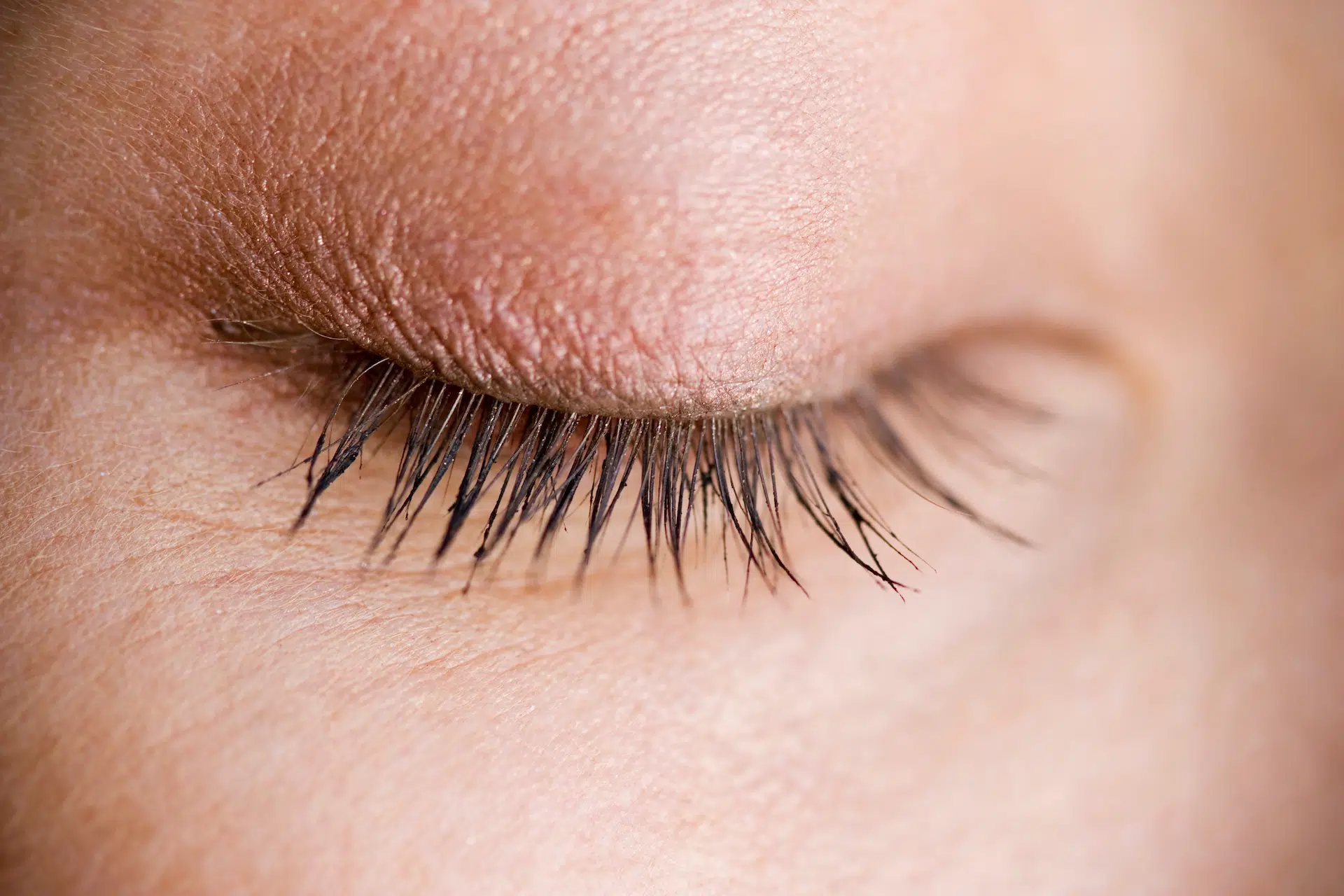
Table: Normal healing vs. lymphatic congestion (persistent swelling)
phase | Normal healing | Signs of lymphatic congestion ("swelling doesn't go away") |
Days 1-3 | Severe swelling, bruising, and a feeling of tightness. Responds well to cooling. | (Not yet clearly distinguishable) |
After 1 week | Swelling subsides significantly, bruises turn yellow/green. Sutures are removed. | The swelling remains unchanged, severe, and "doughy". |
After 3-4 weeks | Residual swelling; socially presentable state usually achieved. Scar is red but closed. | Persistent, "wobbly" swelling, often worst in the morning. Feels "taut" and does not respond to cooling. |
After 3-6 months | The final result is visible. The tissue is soft, the scar is fading. | The doughy swelling (edema) on the eyelid or cheekbone is persistent and has not receded or has barely receded. |
Frequently Asked Questions (FAQ) about "Upper eyelid lift - swelling doesn't go away"„
Here you will find answers to frequently asked questions that we ask patients during consultations regarding a Upper eyelid lift: swelling doesn't go away in our practice.
- I still have swelling 4 weeks after the surgery. Is this already lymphatic congestion?
It's a clear warning sign. While slight residual swelling can be normal, significant, doughy swelling in the case of a Upper eyelid lift after 4 weeks It may no longer be present. It is advisable to have this examined by a specialist such as Dr. Gueven to make a diagnosis and, if necessary, to begin lymphatic drainage early.
- Does lymphatic congestion go away on its own?
Yes, in most cases, but it requires an extreme amount of patience. The body is a master of regeneration. It often just needs a very long time (sometimes 6 to 12 months or longer) to form new, efficient lymphatic drainage pathways. Lymphatic congestion after upper eyelid lift It is usually a problem of time, not durability.
- Does cooling help with a true lymphatic congestion if the swelling doesn't go away?
Hardly. Unlike normal postoperative swelling (which is due to inflammation and trauma), a Lymphatic congestion after upper eyelid lift A mechanical drainage problem. Cooling may provide short-term relief, but it doesn't resolve the underlying blockage. Manual lymphatic drainage is the superior method in this case.
- Can the laser that Dr. Gueven uses for scar treatment also help with lymphatic congestion?
Indirectly, yes. The laser treatment that Dr. Gueven offers to perfect the scar stimulates microcirculation and regenerative processes in the tissue. This stimulation of healing can also reduce the appearance of a scar. Lymphatic congestion after upper eyelid lift It provides positive support and is part of the holistic aftercare concept.
- Was my surgery a mistake if my swelling doesn't go away?
Not necessarily. As mentioned, individual predisposition can play a role. Lymphatic congestion after upper eyelid lift However, this is a strong indication that the surgical technique was too traumatic or (more commonly) that a drooping eyebrow was not recognized and the wrong procedure (an isolated eyelid lift) was performed.
- How often is manual lymphatic drainage necessary?
In the case of a pronounced Lymphatic congestion after upper eyelid lift Specialists often recommend a series of treatments, e.g. 2-3 times a week for several weeks, to train the drainage and help the body find new pathways.
- How much does it cost to treat lymphatic congestion?
Manual lymphatic drainage is a physiotherapy treatment that can be prescribed by a doctor when medically necessary (lymphedema is a medical diagnosis). The costs for any surgical correction of lymphedema are not covered by statutory health insurance. botched upper eyelid lift They are individual and must be clarified in a consultation.
- Could my behavior cause lymphatic congestion?
You can worsen it. If you start exercising too soon in the first few weeks after surgery, lift heavy objects, or sleep on your stomach, you increase the pressure in the head area and make it harder for the lymphatic system to work. Adhering to the prescribed rest period is an important factor in preventing the condition. Lymphatic congestion after upper eyelid lift to avoid.
- Are these "malar bags" (festoons) or lymphatic congestion?
This is an important distinction. Malar bags (or festoons) are swellings on the cheekbone that often already before The surgery was performed and resulted from weakened muscles. Upper eyelid lift This can sometimes even worsen if lymphatic drainage is further impaired. Dr. Gueven recognizes this problem during the initial assessment and incorporates it into the treatment plan (often through an endoscopic mid-face lift).
- Why is consulting Dr. Gueven so important to avoid this?
Because Dr. Gueven, an expert in facial surgery (with over 3,000 procedures performed), can identify the true cause of your "tired look." He will give you honest advice if an isolated eyelid lift poses a high risk of an unbalanced result or complications. Lymphatic congestion after upper eyelid lift His "empathetic" and "sensitive" advice (patient quote) gives you the confidence to choose the anatomically correct and therefore safest treatment.
An open view is the result of careful planning.
The problem „Upper eyelid lift: swelling doesn't go away“It is distressing, but often preventable or treatable. It usually arises when a complex problem (drooping eyebrow) is treated with a simple solution (just skin removal). If you are considering eyelid surgery or are dissatisfied with an existing result, an honest conversation with a specialist is the first step. Dr. Gueven and his team will dedicate their time and utmost professionalism to your questions. Contact us for a personal or exclusive online consultation. Simply send us your inquiry via WhatsApp to +49 173 525 06 74 or via our inquiry form.”.